Working With inorigo®
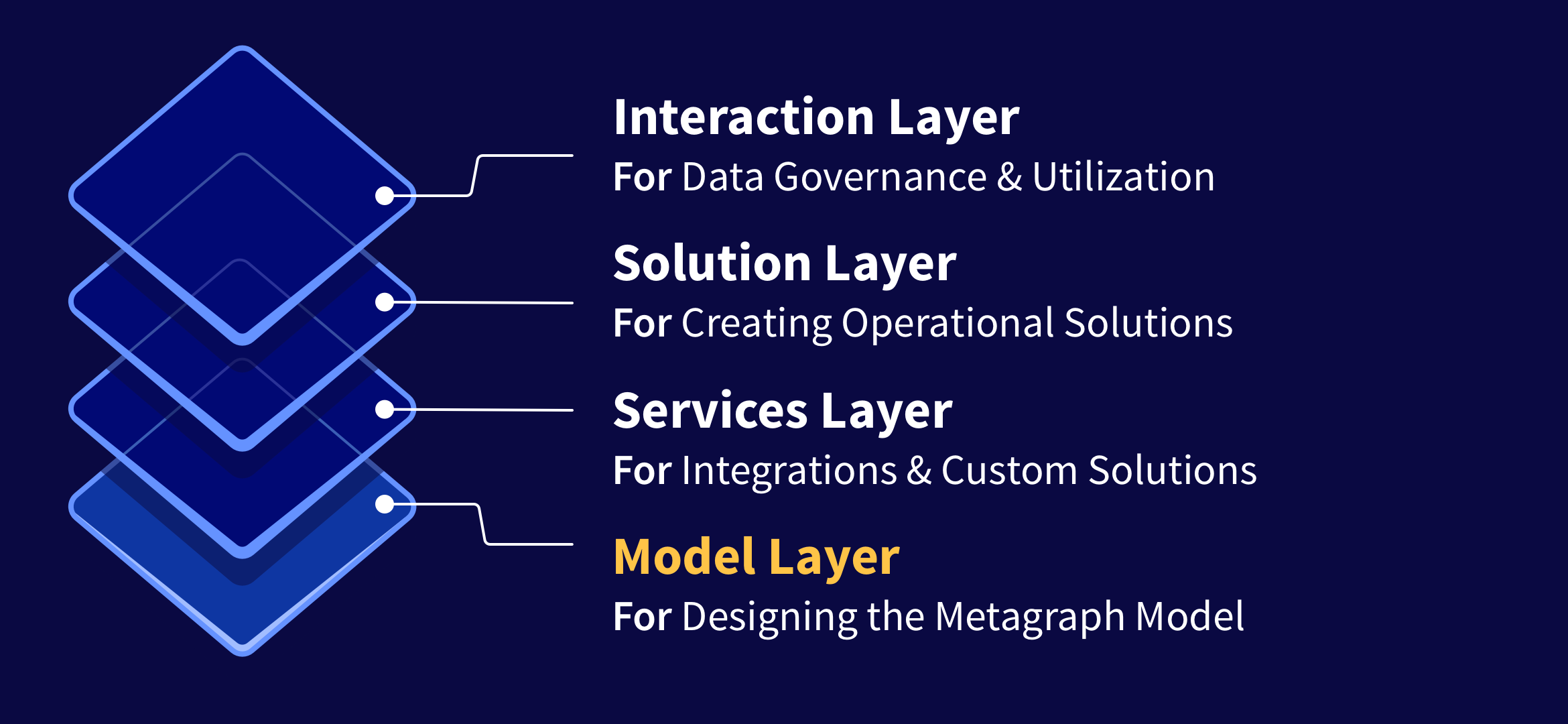
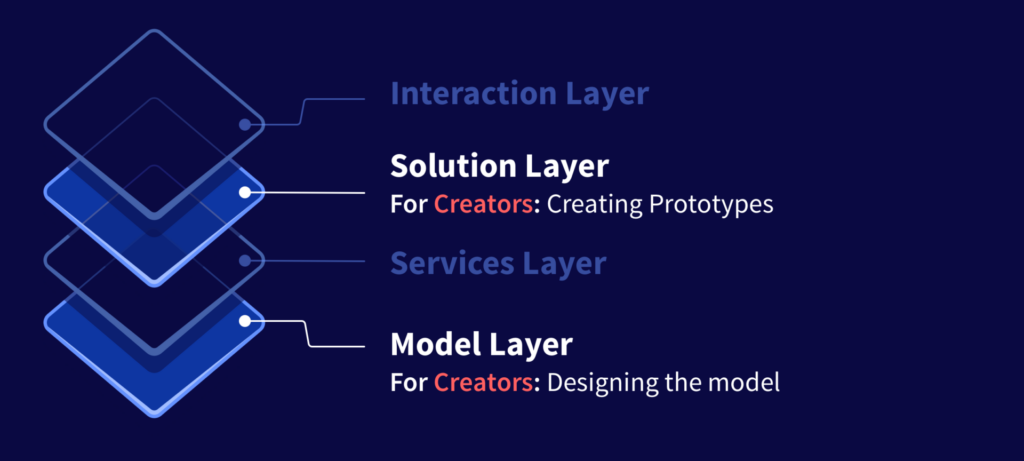
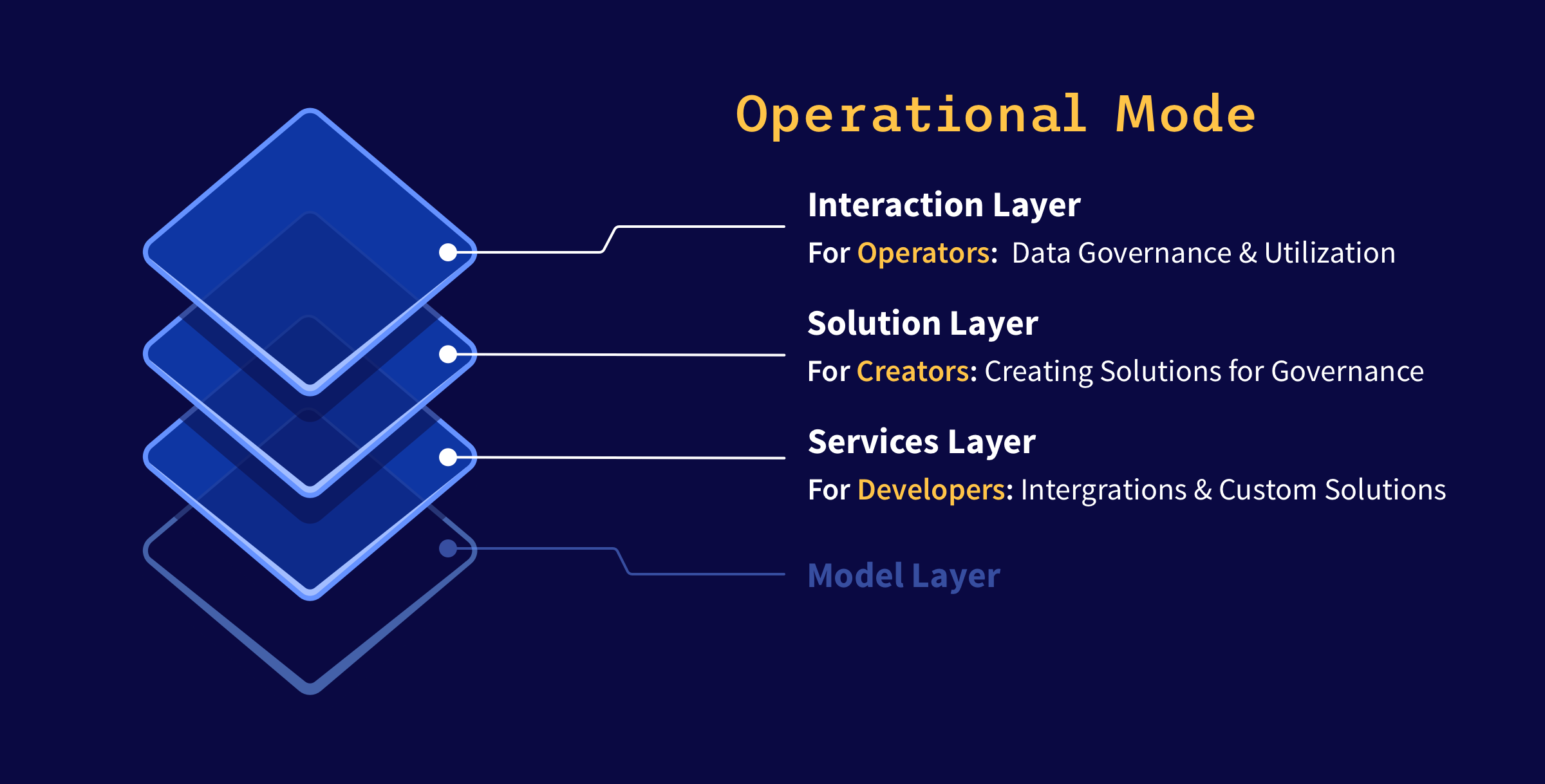
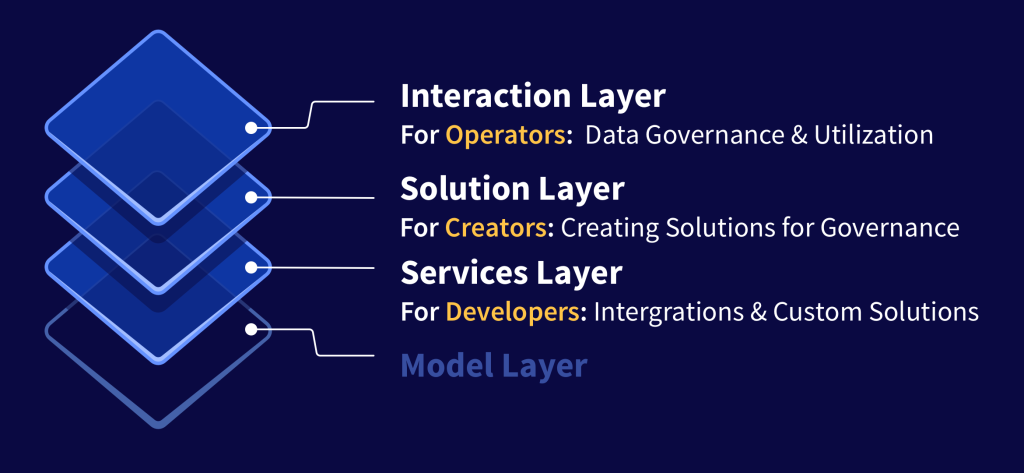
The inorigo® platform can be viewed as a stack of four main layers.

Creator
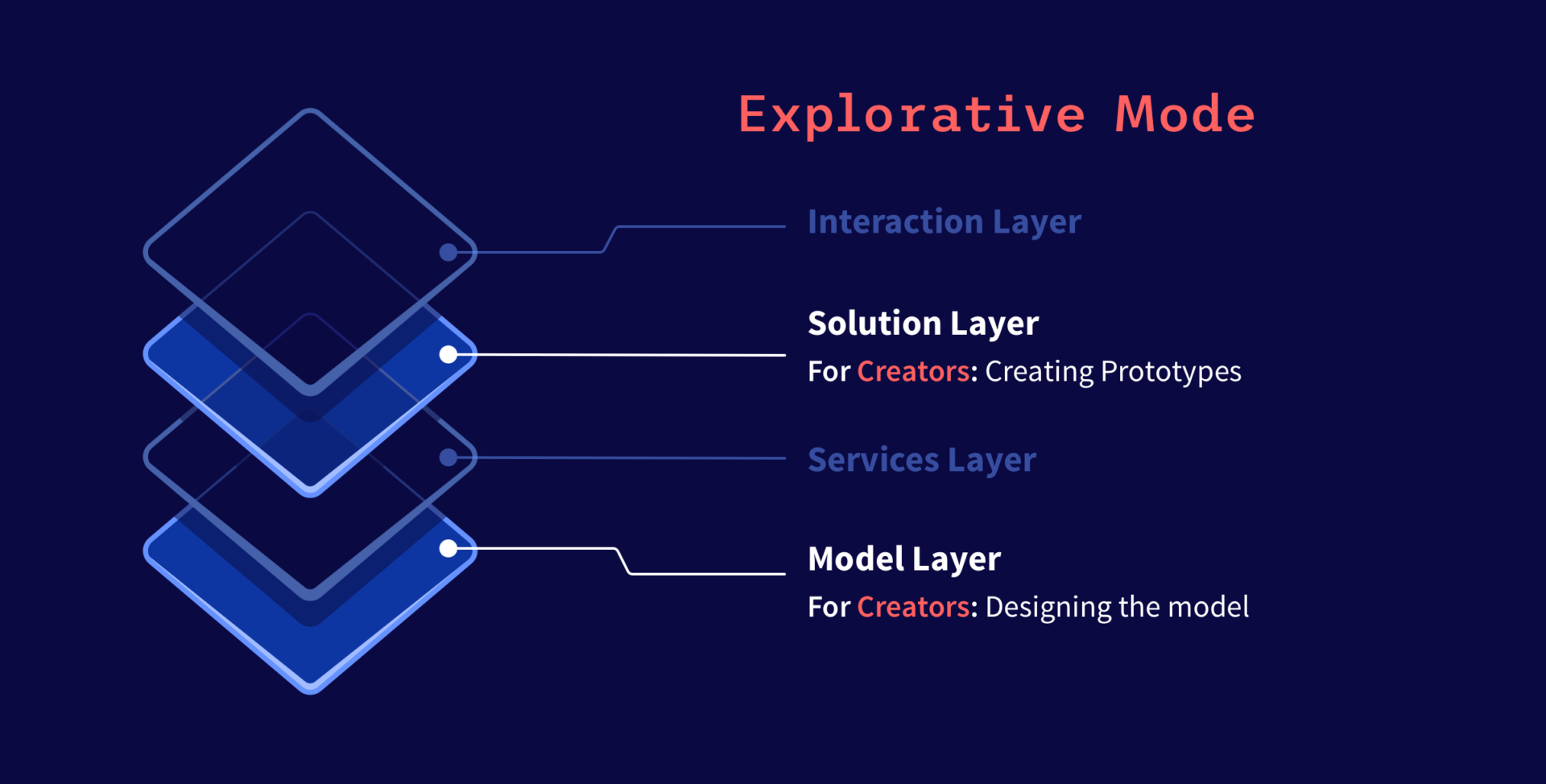
Creators are users, usually without technical backgrounds, who design the Metagraph model and build solutions for operators using the modules in the inorigo® platform.
inorigo’s® low-code/no-code building tools are designed for rapid business prototyping – putting the model to the test and implementing a fully operational, governed solution.
Creators work with the Solution Layer & Model Layer.
Operator
Operators view and interact with the Applications, Solutions, and Model Diagrams that are created for them. Typically, governing and analyzing the data and metadata of their specific domain.
Governance solutions can be designed so that operators interacting with the data do not need to worry about the underlying metagraph model.
inorigo® provides federated, rule-based user management tools with fine-grained control over who can view, edit, and manage what.
Operators work within the Interaction Layer.
Developer
Developers leverage inorigo’s® powerful Web services, such as REST and GraphQL, to build tailored solutions. These can support users in a workflow or automate recurring tasks.
Other solutions can involve scheduling data exchange with surrounding systems, or supporting ML Engineers with Contextualized data Tags.
Developers primarily work within the Services Layer.
inorigo® modes
The inorigo® platform offers two working modes designed to facilitate comprehensive understanding and effective data management.

Prototype
The Explorative mode lets creators rapidly design an information and data model together with business stakeholders. The model can be verified by creating multiple interfaces/workflows using sample data in a series of iterations, without taking shortcuts.

Clarify
inorigo® tools, such as Model Explorer, can visualize metagraph models and make them tangible. This visualization serves as a common reference point for both creators and operators, enabling more profound insights, communication, and decision-making.

Align & Decide
It’s essential for architects, business stakeholders, and IT to agree on a solution to be successful. The inorigo® Metagraph platform caters to all these perspectives. You can build, test, and validate different solutions using Inorigo’s low-code/no-code tools, and then let the three stakeholder groups decide on the best option to be implemented.



Implement & Govern
inorigo® provides powerful tools for governing data and groupings of business concepts, such as Market Segments, Product Ranges, and Purchase & Sales. Operators can maintain data manually or use automation when suitable. With powerful authorization capabilities, governance can be distributed, helping maintain and enrich the common point of reference.

Harmonize & Align
inorigo® has tools suitable for mapping external data and structures to a Meta master. It enables the operational IT system’s configurations and data to be mapped against the Meta Master. This way, the business can identify inconsistencies and cleanse and harmonize the data to increase quality and trust.

Integrate
One major benefit of a Metagraph platform is applying it as the backbone of a digital ecosystem. Once the governance of your business concepts is in place, selected parts of the structure ID’s can be propagated out to operational systems like PLM, ERP, and CRM to create a digital thread through the whole operational value chain.
Integrating data from various sources with the Metagraph verifies the quality and integrity of the data, ensuring that it aligns with organizational needs and standards.

