Start with one use case. Build understanding as you go.
inorigo® is used for a wide range of digital transformation initiatives and industries, from creating complete Digital Twins to specialized end-user solutions. Begin with one important product domain, process, taxonomy, integration or AI context challenge and then evolve the model of your enterprise from that point. Each governed addition solves an immediate need while expanding the organization’s Digital Twin.

Battle proven enterprise security
inorigo® provides a secure, enterprise-ready foundation for information, metadata and knowledge. Security is built into the platform from the ground up, including authentication, authorization, traceability, change management and controlled governance processes.
Every change can be reviewed, validated and governed. Organizations gain transparency into how concepts, metadata and relationships evolve over time, supporting compliance, accountability and trusted operational use.
By combining security, governance and semantic traceability, inorigo® enables organizations to share intelligence confidently across people, AI and IT systems while preserving trust in the underlying meaning.
Different roles, one evolving semantic foundation
With inorigo®, users throughout the business may engage in information ownership through powerful governance tools and user-friendly applications, and systems across the information landscape can interconnect seamlessly for data distribution and harmonization.
Information architects and modelers create reusable structures. Domain experts validate meaning against operational reality. Application users maintain knowledge through interfaces designed for their work. Developers and integration teams make trusted information available to other systems and AI.
This keeps meaning connected to both specialist knowledge and daily.
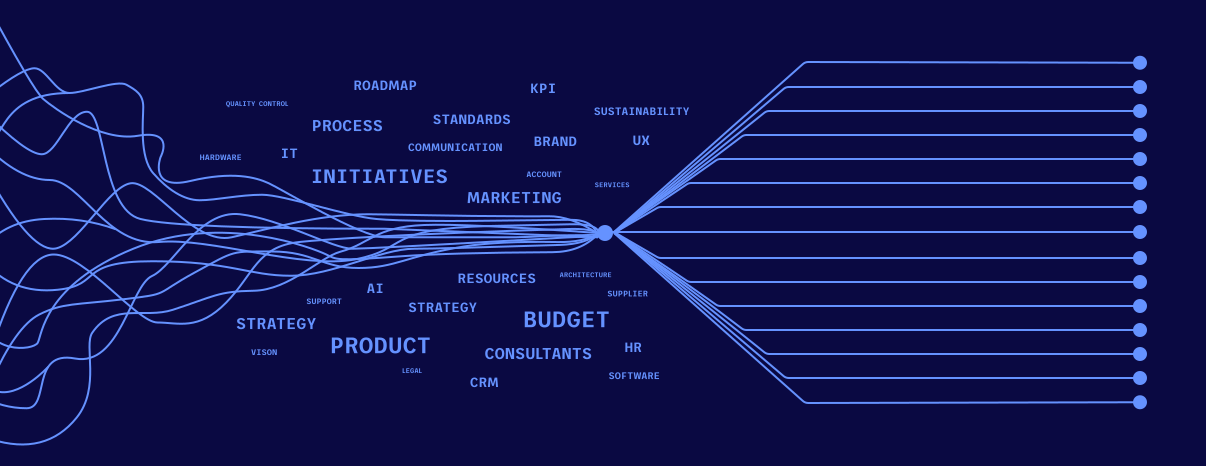
Model what is intended. Capture what is real.
Information & Data Modeling
Model what is intended. Capture what is real
The inorigo® platform is built on metagraph technology, which gives it unique capabilities for mastering complex information. It enables the creation and usage of scalable data models that can evolve over time.
Architecture diagrams generally depict a clean future state. Operational systems contain local terminology, historical decisions, workarounds, exceptions and incomplete structures.
inorigo® allows teams to compare intended structures with real data. Differences become visible and can be reviewed rather than hidden behind an idealized presentation.
The objective is not necessarily to make every perspective identical. It is to understand how different perspectives relate.
We do not need to agree on everything. We need to understand each other.
Ontology-based knowledge capture for operational use
Taxonomies and ontologies define how concepts are named, classified and related. Knowledge graphs connect those definitions with real entities, relationships and business context.
inorigo® brings these layers together so governed meaning can be maintained through applications, connected to operational data and used as trusted context by people, systems and AI.
inorigo® includes built-in support for AI-assisted knowledge capture through its own Model Context Protocol (MCP) based interface. Whether you use Claude, ChatGPT, Antigravity or another agent platform, your choice of AI can help you extract concepts, discover relationships and propose new knowledge structures.
Whatever AI proposes, inorigo® provides the framework to implement, govern and operationalize the result. Knowledge only becomes trusted when it is reviewed and validated by the people who understand the business context.
AI can propose. People decide what becomes trusted.

Enabling the evolution of a Digital Twin of an Organization
A Digital Twin of an Organization does not need to begin as a complete representation of the enterprise. Start with a specific business challenge. Capture the relevant meaning. Connect operational data. Validate the result with the people who understand the domain. Put the resulting intelligence to use.
Every governed definition, validated relationship, connected source and operational application adds another meaningful part to the organization’s digital understanding. Over time, these connected and reusable pieces evolve into a Digital Twin of the Organization.
Start with your drawings, a transcribed meeting, an interview. The future of Digital Twins is organic, not deterministic.
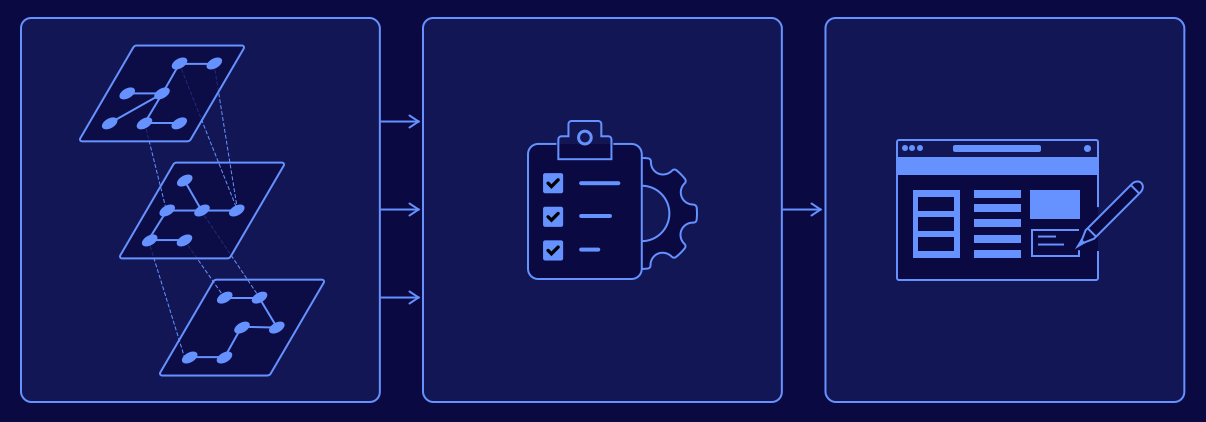
The inorigo® Metagraph has the capability to model multiple levels of abstraction
Metadata Management
Metadata becomes valuable when it remains connected to the people, data and decisions through which it is used. inorigo® turns definitions, classifications, relationships, rules and ownership into an operational asset. Tailored applications give domain experts intuitive ways to maintain metadata and master data without exposing unnecessary technical complexity.
External standards and reference data, including relevant industry classifications, can be connected to the governed model rather than copied into isolated structures. This allows internal meaning and external standards to be related while retaining their respective context and provenance.
Build, generate or vibe code user interfaces and agentic workflows on top of the inorigo® database and its shared semantic model. The model provides more than a data structure. It defines the concepts, relationships, constraints, governance rules and authorization context that applications and agents must follow. This gives every solution a consistent and explicit foundation, instead of allowing each interface, workflow or AI agent to introduce its own interpretation of the business.
Because requirements are maintained as governed, machine-readable structures, developers and AI coding agents begin with a far richer specification of what the organization means, how its information relates and what users are permitted to do. The result is faster application development with clearer requirements, consistent authorization and stronger data quality. Potentially conflicting rules become visible and governable in the shared model rather than being hidden across application code, prompts and integrations.
Dual Governance
inorigo® separates the governance of shared semantic structures from the maintenance of real-world information.
Architects and modelers define reusable concepts, classifications, relationships, constraints and governance rules. Business users then populate and maintain real-world instances through applications tailored to their roles, responsibilities and access rights.
The layered architecture protects users from the technical complexity of the underlying model while helping protect data quality from unauthorized or inconsistent changes. Stable definitions and operational reality can evolve together without compromising the integrity of the shared semantic foundation.
This keeps the human in the loop: specialists govern the structure, while the people closest to the business validate and maintain its operational meaning.
Trusted AI requires trusted context
Most AI initiatives focus on the model. Enterprise reliability depends just as much on the context supplied to that model.
Missing, noisy or contradictory context can produce plausible but unreliable answers. A semantic graph helps assemble relevant concepts, definitions and relationships for the task being performed.
inorigo® provides governed taxonomies, ontologies, metadata and operational knowledge that can be made available to AI and agent workflows.
AI can help extract, structure and propose knowledge. The governed model, access controls and human validation determine what becomes trusted and reusable.
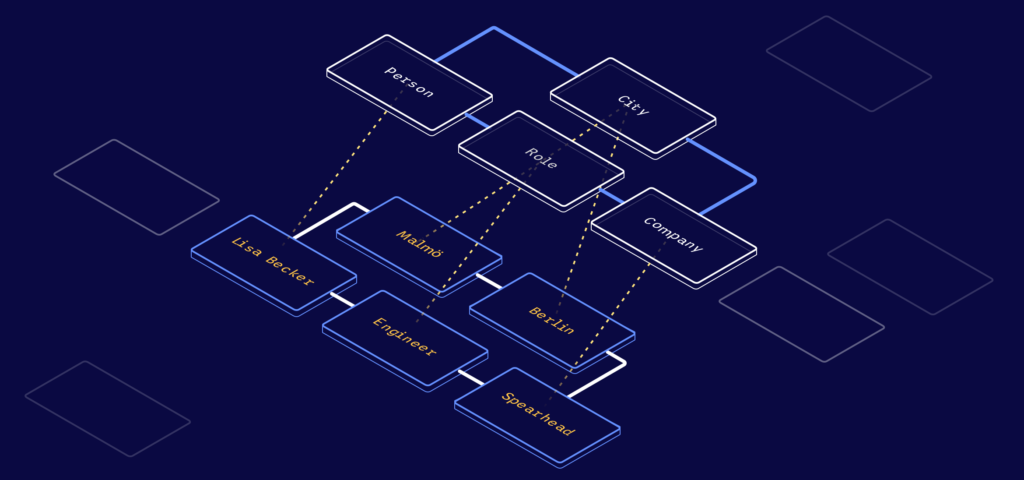
The Dual Governance capability allows users to manage data at different levels of abstraction
Interoperability
iSystems do not need identical terminology or internal structures to understand one another.
inorigo® provides governed definitions, identifiers, mappings and relationships that make differences explicit. This creates contextual interoperability between MDM, ERP, PLM, BI, data platforms, AI and other enterprise systems.
inorigo® finds a natural place servicing other systems in the landscape with definitions, IDs, or data that resides in the platform. Since other systems cannot manage the information structure in the Metagraph database, inorigo® provides powerful tools for building flattened datasets and exporting them via web services like REST APIs and GraphQL.
GraphQL, REST services, structured schemas and configurable data products make governed information available in forms designed for each consumer.
Data Connectivity & Integration
inorigo® connects semantic models with information from existing databases, files, services and enterprise platforms. Source data can be used to populate models, test assumptions, identify inconsistencies and maintain operational solutions.
inorigo® supports seamless integration to of a large variety sources and formats through the Data Source editor. Examples include:
- Amazon Redshift
- MongoDB
- Oracle
- PostgreSQL
- MySQL
- SAP 4/HANA
- CSV
- XLSX
- HTML
- JSON
- RDF
- SHACL
- XML
The purpose of connectivity is not simply to import records. It is to connect operational data with the governed meaning required to understand and reuse it.

Neutral by design
inorigo® provides a semantic foundation across the technology landscape rather than requiring business meaning to be owned by one ERP, data platform, cloud provider or AI model.
Organizations can preserve governed meaning while their applications, infrastructure and AI services evolve.
The value is not uniform technology. It is continuity of understanding.
inorigo® promises #1 No forced source-system redesign
Connect and harmonize information while allowing operational platforms to continue serving their intended purposes.
inorigo® promises #2 No dependency on one AI provider
Make governed context accessible to compatible tools and agents rather than embedding enterprise meaning in one model.
inorigo® promises #3 No static enterprise blueprint
Allow the semantic foundation to grow as knowledge, systems and use cases evolve.
Create governed intelligence for each consumer
inorigo® Knowledge Set Builder provides a visual way to select, combine, map and transform information from the Metagraph and connected external data sources. It can create purpose-built structures for applications, integrations, data platforms, reports, AI agents and other consumers.
Knowledge Sets are particularly useful when information from several systems must be harmonized, flattened or reshaped for a specific purpose. Source systems do not need to share the same terminology or internal structure. The shared semantic model provides the governed definitions and relationships used to map and interpret their data consistently.
The resulting Knowledge Set can be scheduled and distributed in standard formats or exposed through services. It can therefore function as a governed data product, delivering information shaped for a specific consumer while preserving the meaning established in the semantic model.
Knowledge Sets are one way to prepare and distribute governed information. Consumers can also query inorigo® directly through GraphQL when they need flexible access to the Metagraph and its underlying structures and relationships.

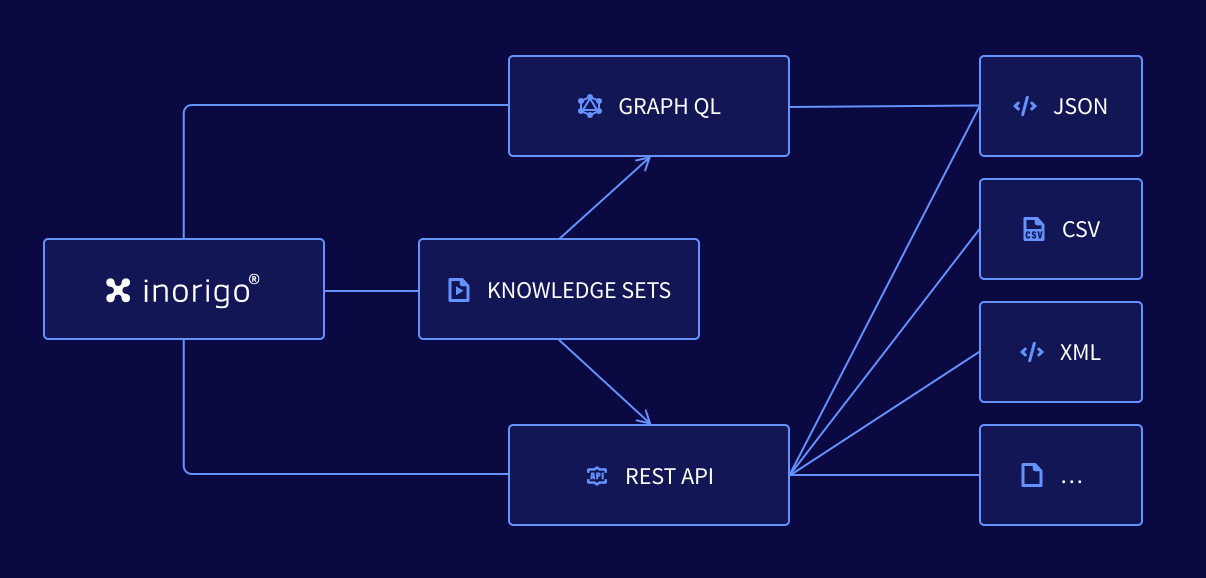
Knowledge Set Builder allows for querying inorigo® and produces the result as a flat table to be consumed by other systems
Visualization & Exploration
Visual models create a shared space in which technical structures and business meaning can be reviewed together. Whether it is UML, ERD, taxonomy hierarchies or knowledge graphs; inorigo® allows users to navigate all these concepts, operational instances and relationships across domains, helping different stakeholders understand what exists, how it relates and where assumptions differ.
Traceability & Explainability
inorigo® makes relationships between definitions, models, data, ownership and consuming structures visible. This supports impact analysis and helps users understand where information came from, how it relates to other knowledge and which parts may be affected by change.
For AI, traceable semantic context makes it easier to inspect the concepts and relationships used to ground a result.
Identify Model GAPS and improve data quality
Compare the intended semantic structure with real operational data. inorigo® provides tools for evaluating the disparity between the current state and desired objectives. Visualizing the model helps identify gaps and prioritize areas for improvement.
Missing relationships, inconsistent classifications, duplicate concepts and unexpected exceptions become visible. Teams can then decide whether the data should be corrected, the model should change or the difference should be preserved and explicitly understood.
This makes data quality a question of meaning and fitness for use, not only technical conformance.

Build. Test. Validate.
The typical inorigo® setup involves working in two modes: explorative and operational. Operational mode is for business experts and knowledge workers who run day-to-day operations and work with real-world data. Explorative mode enables information architects, modelers and domain experts to develop concepts, compare alternatives and test models with representative data.
Explorative mode supports prototyping and testing of new concepts and solutions.
inorigo® then provides tools to synchronize between explorative and operational modes, ensuring data and models always stay current and consistent.
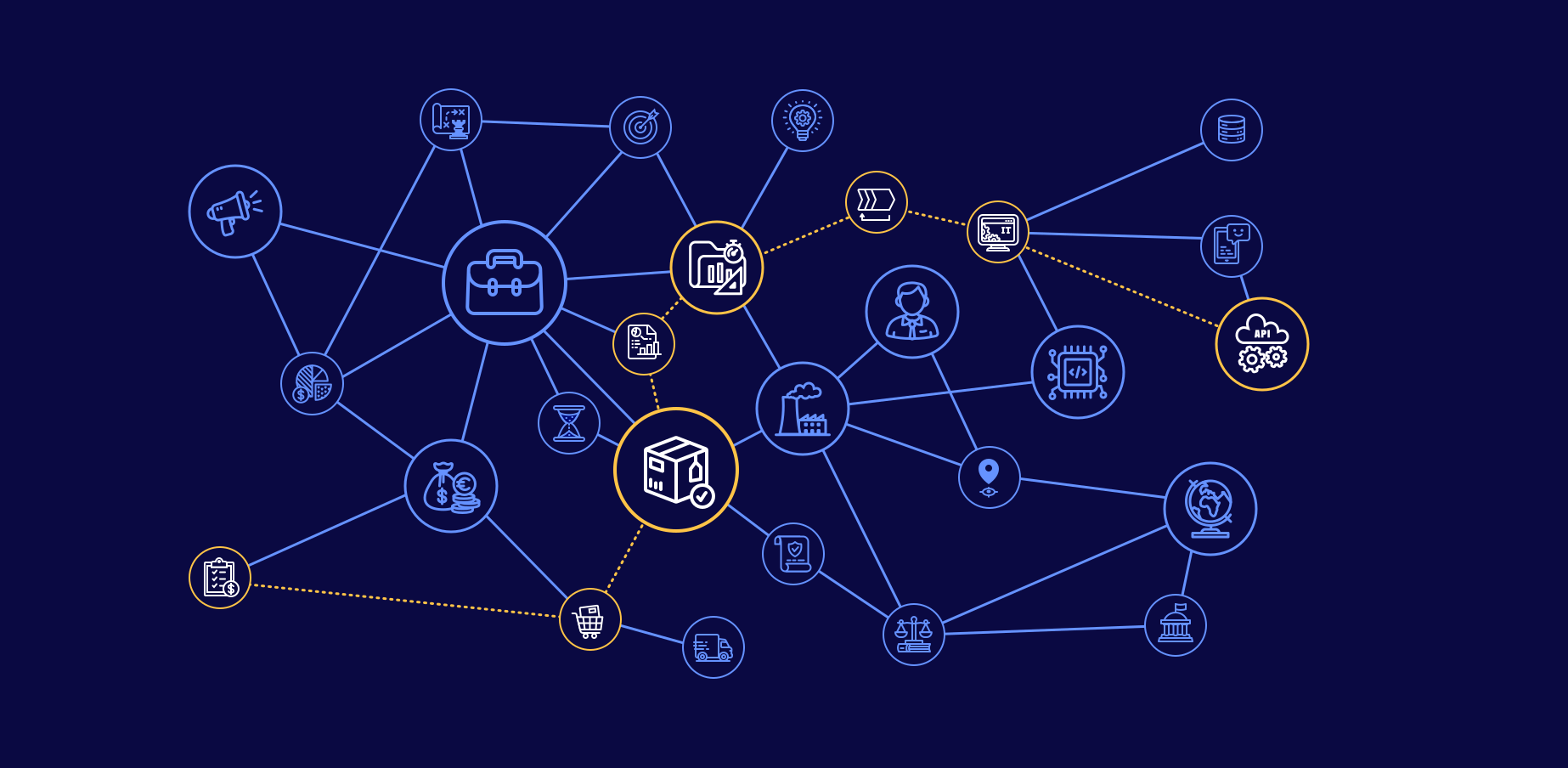
inorigo® facilitates understanding and communicating how different entities relate and are connected
Configuration
inorigo® enables multi-dimensional configuration across various product disciplines, services, and related entities.
Products, services and other configurable structures often contain rules that differ by market, customer, lifecycle stage, technical context or organizational perspective.
inorigo® represents these dimensions and their relationships in one governed model. Rules can be inherited, specialized and reused without duplicating the complete configuration for every variation.
Smart Rules and Inherited Properties
Properties for attributes are highly configurable in inorigo, and may be inherited and reconfigured throughout structures. Properties such as Automation, Constraints, Multiplicity, Query-based criteria, and Serial number generation may be defined for attributes and for relations.
Instance naming may be presented dynamically based on attribute values or relationships.
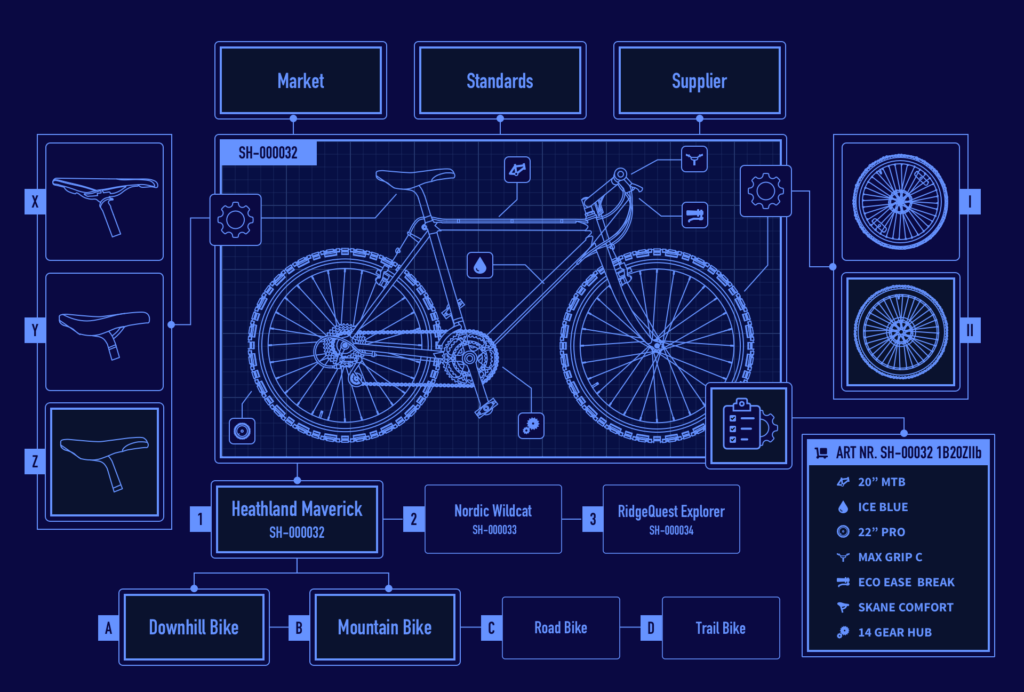
inorigo’s® configuration capabilities allow for creating Bill of Materials and Specifications
See the complete flow with your own use case in 45 minutes
Bring one product structure, taxonomy, ontology, process, rule or integration challenge.
We will show how inorigo® can:
- capture existing knowledge and perspectives;
- create or extend a semantic model;
- connect the model with representative data;
- identify differences between the intended and current situation;
- validate meaning with domain experts;
- operationalize the result through an application or service;
- make trusted intelligence accessible to systems or AI;
- establish a foundation that can evolve over time.
You do not need a finished ontology or enterprise-wide transformation program.
Start with one part of the business that needs to be better understood.